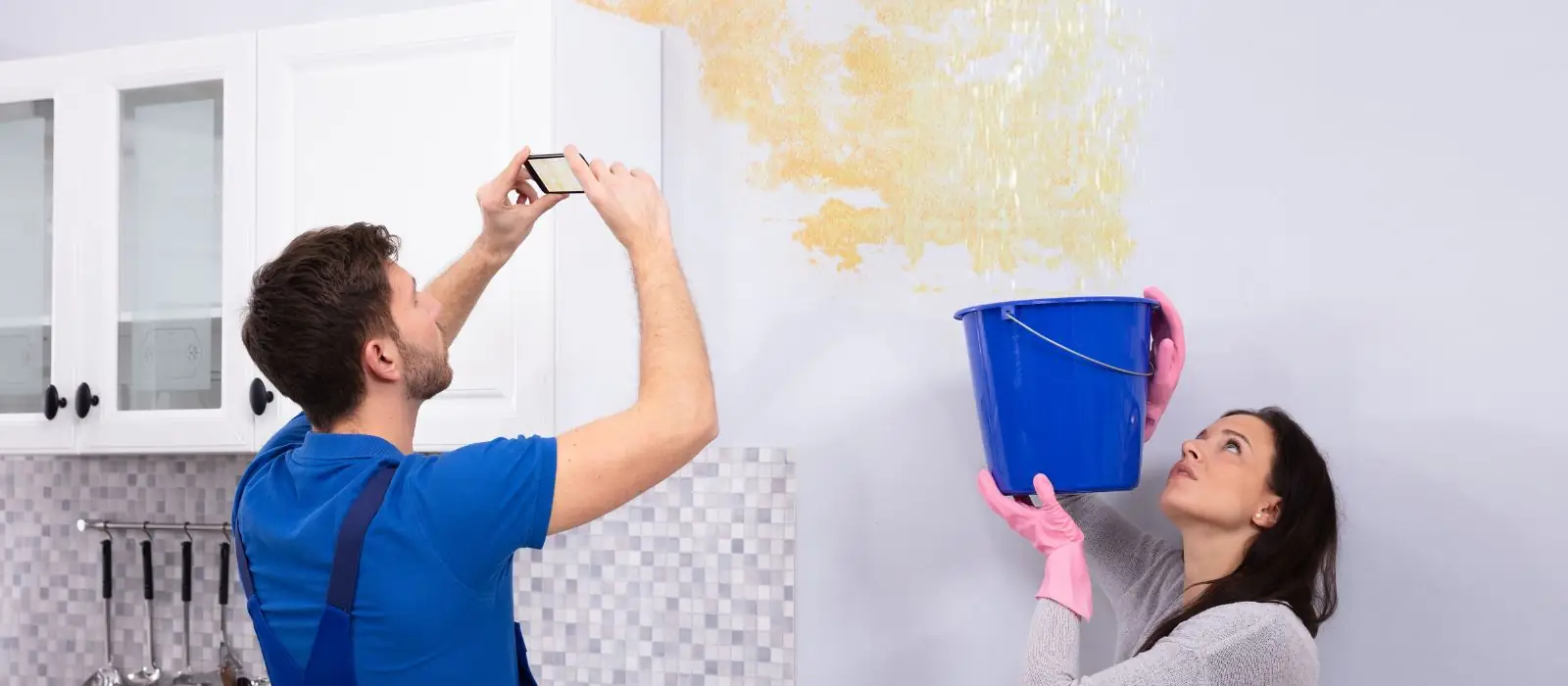
The short answer for tenants
Often, yes, for your belongings. A typical renters policy pays for personal property damaged by a sudden and accidental event, such as a burst supply line, an overflowing dishwasher, or a failed water heater. It usually does not pay for the building itself, because the structure belongs to your landlord.
The details live in your policy, so read it or ask your insurer. Coverage can differ by cause of loss, by type of water, and by the limits and deductible you chose when you signed up.
Think of the claim in two halves. Your side is the couch, clothes, electronics and bedding. The landlord's side is drywall, flooring, cabinets and wiring. Keeping those halves separate makes every phone call easier, and the rebuild side of the job, like our water damage repair work, is normally the owner's to arrange.
What a renters policy usually includes
Most renters policies bundle three kinds of protection. Personal property covers your belongings. Additional living expenses can help with hotel stays or extra meal costs if the unit cannot be lived in while repairs happen. Personal liability can matter if water from your unit damages a neighbor's.
| Type of loss | Often covered by renters policy | Usually the landlord's side |
|---|---|---|
| Sudden pipe burst inside the unit | Your damaged belongings | Walls, floors, ceilings, plumbing repair |
| Appliance overflow you caused | Your belongings, and possibly liability for a neighbor | Building repairs, depending on the lease |
| Slow leak that went unreported | Often limited or excluded | Often the landlord's responsibility to repair |
| Sewer or drain backup | Often excluded unless an add-on was purchased | Building cleanup and repair |
| Flood from rising surface water | Usually excluded, needs separate flood coverage | Usually excluded from standard property policies |
Treat the table as a general pattern, not a promise. Policies vary, and endorsements change the picture in both directions.
What your landlord's building policy covers
The landlord's property insurance generally protects the structure: walls, flooring, fixtures, and the plumbing and mechanical systems the owner provides. It does not normally protect your furniture or clothing. That gap is the reason renters policies exist.
Your lease decides who handles what when a cause is disputed. If a fixture failed on its own, the repair usually falls to the owner. If something you did caused the loss, the lease and your liability coverage may come into play.
Do not assume the landlord's insurer will replace your belongings. In most cases it will not, and waiting on that assumption can cost you time.
Sewer backup and flood: the common gaps
Two causes of water surprise renters more than any others. Sewer or drain backup is often excluded from a base policy and sold as an add-on. Flood, meaning water rising from outside, is generally excluded from standard policies altogether.
Ask your insurer directly whether backup coverage is on your policy and what the limit is. Add-ons usually have to be in place before a loss, not after.
Backed-up sewer water is the worst category of water. It counts as grossly contaminated under the S500 water categories, so soaked porous items such as upholstery and carpet padding are normally discarded, not dried. Knowing that in advance helps you set expectations about what can be saved.
What to do in the first day
- Stop the water if you safely can. Know where the unit's shutoff valve is and tell your landlord right away if you cannot find it.
- Notify the landlord or property manager in writing, with a text or email, so there is a dated record.
- Photograph and video everything before moving it: standing water, wet walls, damaged belongings, and the source if visible.
- Call your insurer to open a claim and ask what they need from you. Keep the claim number with your photos.
- Move valuables and electronics to a dry room, and lift furniture legs off wet carpet with foil or plastic if you have it.
- Keep receipts for hotel stays, meals and emergency purchases.
If water is still spreading or your unit is soaked, call us now so a crew can assess the damage and start extraction and drying.
☎ Call (385) 988-9410Documenting damage for the insurer
A written inventory beats memory. List each damaged item with a short description, the approximate age, and what you paid if you remember. Photos of model numbers and serial plates help.
Do not throw things away before you document them, unless they are contaminated and unsafe to keep. If you must discard something, photograph it first and note the reason.
Ask your landlord who is arranging the structural drying. Professional drying uses moisture meters, air movers and dehumidifiers, with moisture readings taken daily until materials reach a dry standard. A drying log can support the building side of a claim.
Moving and protecting belongings
Wet drywall and carpet keep releasing moisture, so belongings left in the affected room may keep getting worse. Move what you can to a dry area, and ask the landlord about temporary relocation if the unit is not safe.
Hard, nonporous items such as glass and metal can usually be cleaned and dried. Porous items such as mattresses, cushions and cardboard boxes that sat in water are harder to save. Let your insurer know before you throw away anything of high value.
If you are weighing a short-term move, check whether your policy's living-expense coverage applies and what documentation it requires. Our water mitigation crews work with tenants and property managers when drying has to start fast.
Spanish Fork note: renting in a town of owners
Census data puts Spanish Fork at 80.4% owner-occupied housing, so tenants are the smaller group and rentals are often single-family homes, basements or townhomes owned by individuals. That makes your lease and your landlord's insurance the first documents to pull out, because the owner may handle the building claim on a different timeline than your own.
The Utah Insurance Department notes that standard homeowners policies do not cover flood, and flood policies typically carry a 30-day waiting period. The same logic applies to tenants: if you are renting near the Spanish Fork River, ask about flood coverage for your belongings well before a wet season, not during one.
The city's flood information page recounts the 1983 and 1984 river floods, with typical spring flow of 500 to 1,000 cfs. Look up your address at the FEMA Flood Map Service Center, then ask your insurer what a contents-only flood policy would cost you.
Source types: US Census Bureau, Utah Insurance Department, Spanish Fork City flood information page, FEMA Flood Map Service Center
Frequently asked questions
Usually not. Those belong to the landlord and fall under the landlord's property policy. Your policy typically focuses on your belongings, living expenses and liability.
Often it covers your belongings damaged by a sudden and accidental burst. Gradual leaks and neglect are frequently excluded, so check your policy and ask your insurer.
It depends on the cause and on your policy. Your own policy may respond for your belongings, and the neighbor's liability coverage may be involved. Report it to your landlord and insurer promptly.
Often it is excluded unless you added backup coverage. Ask your insurer whether the endorsement is on your policy and what it limits.
Stop the source and protect belongings, but document first. Take photos and video, keep receipts, and ask your insurer what to retain before discarding anything.
It is worth a conversation with your insurer. Standard policies generally exclude flood, and flood policies typically have a 30-day waiting period. Check the FEMA flood map for your address, then ask what contents coverage would involve. Our crews also cover nearby Springville and Payson rentals.