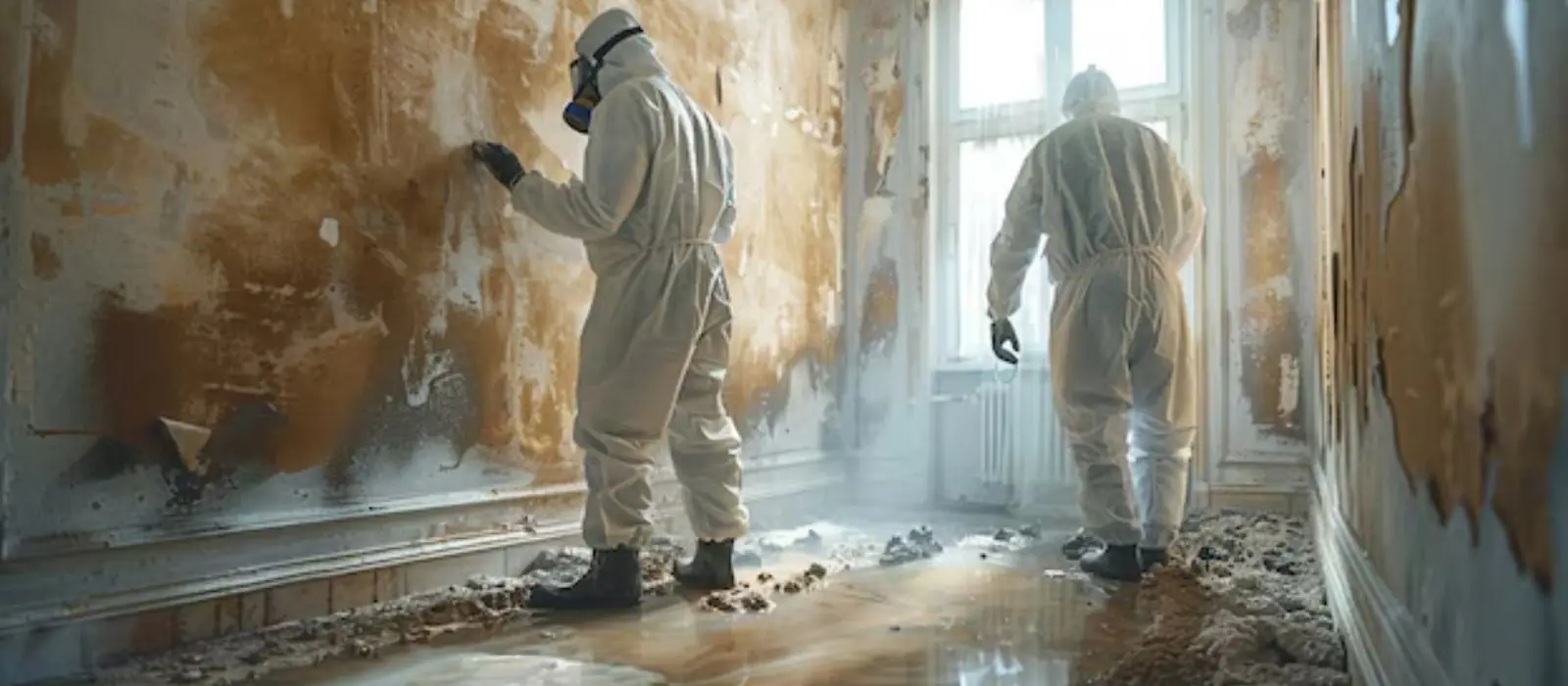
Mold remediation in Spanish Fork is the process of removing mold and the materials it has damaged, after the moisture that fed it has been fixed. It is not a cleaning product or a spray. Remediation follows a written plan based on ANSI/IICRC S520, the published standard for mold remediation, and you can ask any company whether its crews work to it.
Mold shows up after leaks that were never fully dried: a toilet or sink line, an air conditioner condensate line, a roof or siding leak, or a wet basement. If you have found it, our 24/7 line is open, and the sections below explain what happens next.
Musty smell or dark spots after a leak? Here is what that can mean.
People rarely search for remediation by name. They notice a musty smell in a closet, dark spots at the corner of a bathroom ceiling, or growth behind a piece of furniture that was pushed against a wet wall. Those signs point to moisture that stayed in a material long enough for mold to grow, and the trade term for dealing with it is mold remediation.
Visible growth is the part you see. Behind it, drywall, insulation or framing may be wet, so the first step is finding the moisture and fixing it. Without that, cleaning is temporary.
Mold testing and inspection
An inspection looks at where the moisture came from, how far the growth extends and which materials are affected. It usually involves visual checks, moisture meters and sometimes thermal imaging to find wet areas behind surfaces.
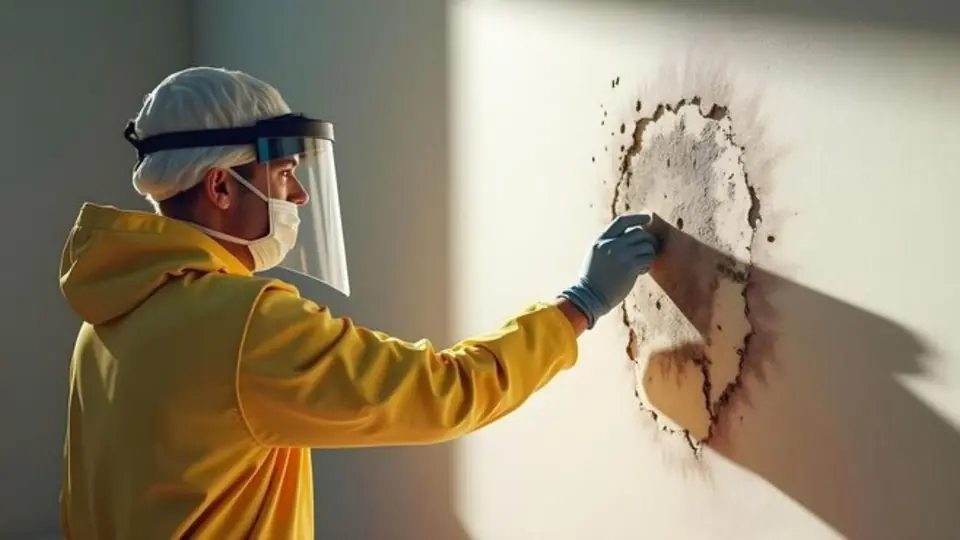
Sampling can confirm what is growing and compare indoor and outdoor air, but it does not replace finding the water. Testing decisions should come from a clear reason, such as a real estate transaction, an insurance request or a need to document clearance after removal.
Many homeowners ask how much notice is needed for an inspection. Call and describe the situation, and we will explain scheduling and what to expect. We do not promise arrival windows. Ask whoever you hire to explain their process, what they will measure and what the written scope will include.
Mold after water damage
Water damage and mold are linked. Drywall, carpet pad and insulation that stay wet are where mold usually starts, and the longer materials are wet, the more likely growth becomes. That is why drying quickly after a leak matters, and why water mitigation comes first.
If you had a leak and the damage was dried well, mold is less likely. If you suspect the wall was never opened or dried, inspection can check without guessing. A musty smell that returns after cleaning usually means moisture is still there.
Mold removal and black mold cleanup
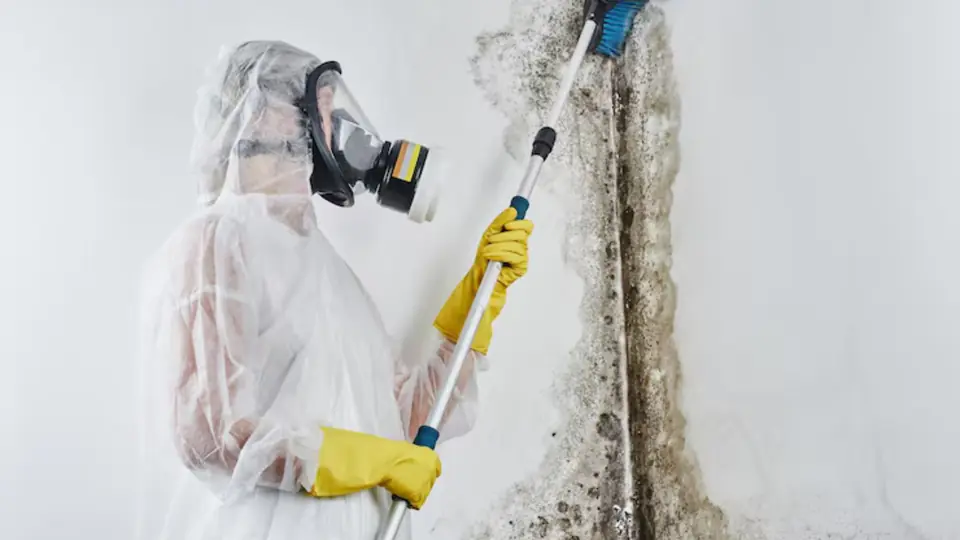
Mold removal is the work crews do inside a contained area. Plastic barriers and negative air machines keep spores from spreading. Crews remove porous materials such as affected drywall, carpet and insulation, and clean hard surfaces using HEPA vacuuming and damp wiping.
Dark or black growth is not automatically a specific species. Only lab identification tells you what is growing, and the cleanup approach is the same either way: contain, remove, clean and verify. Health questions about exposure belong with a physician, not a website.
Remediation is followed by post-remediation verification, a visual check and sometimes clearance testing, to confirm the work met the written goals. No honest company promises mold will never return, because the moisture source decides that.
How the process runs
- Inspection and moisture source identified
- Written scope and price explained before work starts
- Containment and negative air set up around the area
- Contaminated porous materials removed and bagged
- Surfaces HEPA vacuumed and cleaned
- Drying and humidity control
- Verification, and clearance testing when needed
- Rebuild of removed materials, usually a separate scope
Want an inspection explained before you commit? Call and describe what you found.
☎ Call (385) 988-9410Mold, home sales and loans
Mold sometimes appears during a home sale. A lender or buyer may ask for removal and independent clearance testing before closing. We can explain what remediation involves and what documentation is available, but lender requirements vary, and we cannot promise a lender will accept any report.
Independent testing by a separate party is often preferred for clearance because the remediation company is not grading its own work. Ask your agent or lender what they require.
Mold in Spanish Fork basements and crawl spaces
Spanish Fork's spring runoff, window wells and irrigation season can put moisture against foundations. Pressurized irrigation typically runs from about mid-April to mid-October, and water pooling at a foundation is a common source of basement dampness. Crawl spaces with wet insulation or a dirt floor are another place growth starts.
Mold is a moisture problem first. Fix the leak, drainage or humidity, and then deal with what grew. For crawl space water, see flood damage restoration, and for the first steps after a leak see water damage cleanup.
What changes the cost of mold remediation
| Cost factor | How it changes the job |
|---|---|
| Affected area | More area means more containment and more removal. |
| Materials | Drywall and insulation are removed, while framing is often cleaned. |
| Access | Attics, crawl spaces and tight rooms add labor. |
| Containment and air filtration | Barriers, negative air and HEPA equipment add setup and days. |
| Verification | Clearance testing is a separate step. |
| Rebuild | Replacing removed materials is estimated separately. |
Insurance may cover mold that resulted from covered water damage, but many policies limit or exclude mold, so check your policy or ask your insurer. We explain scope and price before work starts.
Serving Spanish Fork and nearby towns
We handle mold work in Spanish Fork and in nearby towns such as Payson and Provo. If the cause is an active leak, emergency water removal comes first.
Mold remediation questions
Removal is the physical work of taking out growth and contaminated materials. Remediation includes the plan, containment, removal, cleaning, drying and verification, plus finding and fixing the moisture source.
Not always. If you can see growth and know the moisture source, testing may not change the plan. Tests are useful for documentation, real estate transactions and post-remediation clearance.
Bleach does not solve the moisture problem and does not work well on porous materials. Hard, nonporous surfaces can be cleaned with detergent and water. Porous materials with growth usually need removal.
No company can promise it will not. If the moisture source is fixed and the area stays dry, regrowth is less likely.
It depends. Mold from covered water damage may be covered, while many policies limit or exclude mold. Check your policy or ask your insurer.
Yes, within the limits of access. Tight spaces take more time, and the moisture source still has to be fixed first. We explain what is involved before work starts.