Why we do not quote a number here
Crawl space mold jobs vary too much for a fair figure in a blog post. A low, dry crawl space with light growth is a very different day than a wet one with soaked insulation. The honest answer is a list of what moves the price, and a quote after someone looks.
Call for your real number once the space has been assessed. We work with homeowners in Springville, Mapleton and Spanish Fork, and the questions are much the same everywhere. Anyone who names a price without seeing the space is guessing.
The main cost drivers
- Access: a full-size hatch is easier than a tight vent opening.
- Height: low clearance slows crews working on their backs.
- Area: a larger footprint means more material, labor and drying.
- Insulation and subfloor: affected batts must come out, and sheathing may need cleaning.
- Moisture source: plumbing leak, groundwater or vapor each need a different fix.
- Containment: sealing the work area and running HEPA air scrubbers.
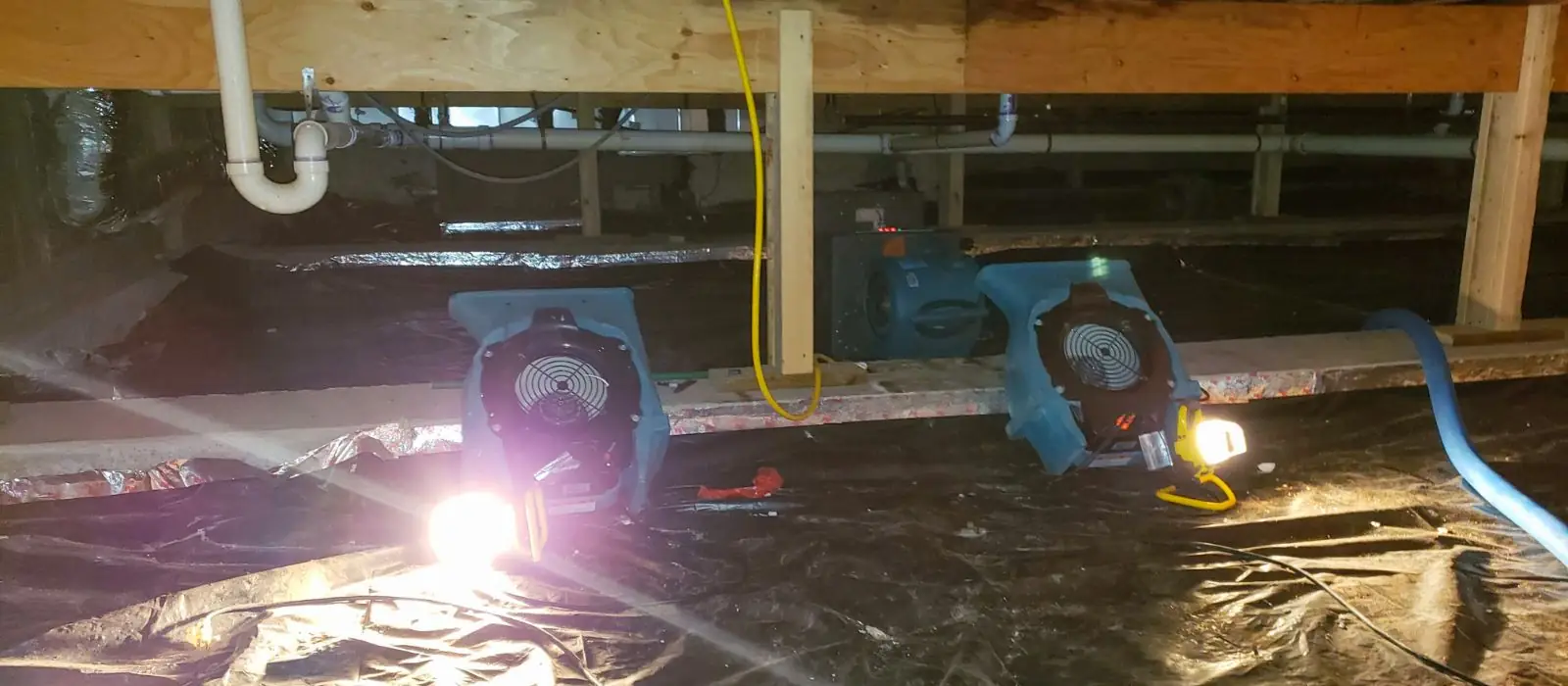
- Drying: air movers and dehumidifiers run until moisture readings reach target.
- Verification: post-work moisture checks and optional testing.
Access and height shape the labor
Crews work in crawl spaces on their knees or backs, in protective gear and respirators. Low clearance and narrow openings slow the work and limit equipment size.
Work gets slower with every restriction. The company that sees the access will price it fairly, so photos of the entry can help on a first call.
Hauling matters too. Every bag of insulation and every piece of cut subfloor has to be carried out through the same opening the crew used to get in. A long crawl from the hatch to the far corner adds time to every trip, and that time shows up in labor.
Scope table: light, moderate and extensive
| Scope | What it looks like | Typical work |
|---|---|---|
| Light surface growth | Spots on framing or subfloor, dry insulation | Containment, HEPA vacuuming, damp wiping, drying check. |
| Moderate growth | Spread across joists, some affected subfloor areas | Containment, cleaning of wood, partial material removal, dehumidification. |
| Extensive with insulation removal | Wet or contaminated insulation, widespread growth | Full containment, insulation removal and disposal, cleaning, extended drying, verification. |
These are general categories. Your space may fall between them, and the assessment decides.
Want to know which scope fits your crawl space? Call us and we will schedule an assessment.
☎ Call (385) 988-9410The moisture source drives everything
Mold needs moisture. A plumbing leak is repaired by a plumber, then the space is dried and cleaned. Groundwater and vapor problems point to drainage and grading, which is a separate trade.
Restoration is not waterproofing or foundation drainage work. We remove growth and dry the structure. We do not install drains, sump systems or exterior waterproofing, and we will tell you when a different contractor is needed.
Vapor barrier installation is also a separate trade. It often follows remediation, and pricing it separately keeps each scope clear.
What the company does and does not do
| Does | Does not |
|---|---|
| Assess growth and moisture | Install drainage or sump systems |
| Contain and clean to ANSI/IICRC S520 practice | Do exterior waterproofing |
| Remove affected insulation | Excavate or repair foundations |
| Dry with dehumidifiers and air movers | Install vapor barriers as a trade |
| Verify moisture readings | Promise mold will not return |
Our mold remediation team handles the cleaning scope. If water is involved, our mitigation crews handle the drying.
Containment, drying and verification
Containment keeps disturbed spores from reaching living space. HEPA air scrubbers filter the air during work. These items add equipment and setup time, but they are part of doing the job to S520.
Drying takes days, not hours, and readings are taken daily. Verification confirms the structure reached target before anything is closed.
Testing is optional and should be discussed up front, so you know who pays for it and how results will be read.
Ask what the final report will include. Good documentation lists moisture readings by location, photos of what was removed, and the dates equipment ran. That paper trail also helps if you sell the house or talk with your insurer later.
Insurance and getting a fair quote
Sudden and accidental water damage is often covered, while gradual leaks and neglect often are not. Mold coverage varies. Check your policy or ask your insurer before work begins.
Ask each company what is included, what is not, and how changes are handled if the scope grows. A written scope beats a verbal one.
Spanish Fork note: frost depth, runoff and flood coverage
The city is responsible for the sewer main up to the property line and the owner for the lateral beyond it. Crawl space moisture is rarely a sewer issue, but if you see sewage, call a plumber and the city public works department.
The Spanish Fork River flooded in 1983 and 1984, and a typical spring flow is 500 to 1,000 cfs. Look up your address at the FEMA Flood Map Service Center (msc.fema.gov) to check if your home sits in or near a mapped flood zone.
The Utah Insurance Department says standard homeowners policies do not cover flood, and flood policies typically have a 30-day waiting period. If your crawl space took on floodwater, ask your insurer what applies.
Source types: city structural design criteria, city flood information page, FEMA Flood Map Service Center, Utah Insurance Department
Frequently asked questions
Not honestly. Cost depends on access, area, insulation and the moisture source, so someone has to see the space first.
No. It is a separate trade and is typically done after remediation and drying.
No. Restoration removes growth and dries the structure. Drainage and waterproofing belong to other contractors.
If it is wet, contaminated or affected by growth, usually yes. Dry, clean insulation may stay.
Testing is optional. Discuss when and why with the company doing the work.
The city is responsible for the sewer main up to the property line, and the owner for the lateral from the property line to the building. Call a plumber for the lateral and a restoration crew for cleanup.