The process in one paragraph
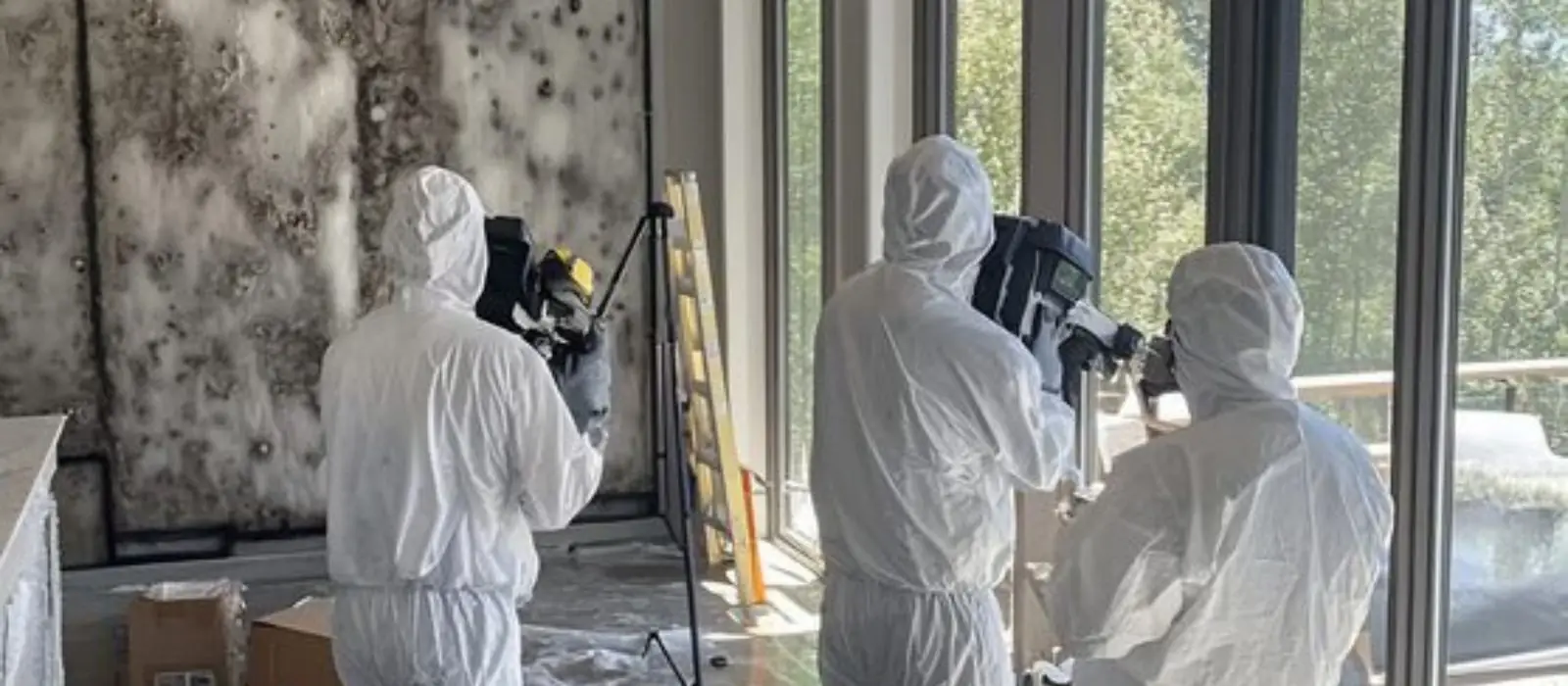
A proper basement mold job starts with finding why the space is wet. The crew then seals off the work area, runs air under negative pressure with HEPA filtration, removes porous materials that cannot be cleaned, cleans what remains, dries the structure and checks the result before rebuilding.
Skipping the moisture step or the containment step is how jobs fail. Mold needs moisture to grow, so cleaning a surface without fixing the water source only resets the clock.
Industry practice for this work is set out in the ANSI/IICRC S520 standard for mold remediation. You can ask any company whether its crews work to it.
Step by step timeline
Every basement is different, so use this as an order of operations, not a schedule.
- Inspection: a technician looks at the visible growth, uses a moisture meter and a thermal imaging camera, and traces the moisture source.
- Written scope: the company lists the affected areas, the materials to be removed, the equipment and the verification plan.
- Source control: leaks, grading, plumbing or humidity problems are corrected or a plan is made to correct them.
- Containment: plastic barriers and sealed openings isolate the work zone so spores are not tracked through the house.
- Negative air: HEPA air scrubbers pull air out of the zone, creating pressure that keeps contaminated air inside.
- Removal: porous materials such as wet drywall, insulation and carpet that cannot be cleaned are cut out and bagged.
- Cleaning: framing and other salvageable surfaces are HEPA vacuumed and wiped or abraded.
- Drying: air movers and dehumidifiers bring moisture readings back to normal levels.
- Verification: the work is checked visually and, where specified, by clearance testing.
- Rebuild: drywall, insulation, paint and flooring are replaced once the area is confirmed ready.
Containment, negative air and HEPA filtration
Disturbing mold can spread it. That is the reason for containment. Poly sheeting and zippered doors form a barrier, and the HEPA air scrubbers run continuously so air moves into the zone, not out of it.
HEPA filters capture fine particles that ordinary shop vacuums blow back into the room. A crew that vacuums with a household machine or skips the barrier is not following accepted practice.
Homeowners should expect the work area to be off limits. Plan where the household goes, and keep pets and children away from the plastic barriers.
What gets removed and what gets cleaned
Porous materials hold moisture and growth deep inside, so they are usually removed. That includes saturated drywall, insulation, carpet and pad, and ceiling tile. Non-porous and semi-porous materials like concrete and framing lumber can often be cleaned.
Removal is done carefully to limit dust. Materials are bagged inside the containment and carried out through a controlled path. Your written scope should name what comes out.
| Material | Typical approach | Why |
|---|---|---|
| Drywall with growth | Remove and replace | Porous, hard to clean through the paper face |
| Insulation | Remove and replace | Holds moisture and cannot be cleaned |
| Carpet and pad | Remove | Porous and trapped moisture |
| Framing lumber | HEPA vacuum and clean | Solid, can often be cleaned and dried |
| Concrete | Clean and dry | Non-porous surface can be cleaned |
Ask which items are being removed and which are being cleaned. A scope that lists both gives you a clear picture of the work.
Drying, verification and clearance testing
After cleaning, the area must dry. The crew uses air movers and dehumidifiers and records moisture readings on a regular basis until the materials are at the target level. Mold needs moisture, so a dry structure is part of the result.
Verification checks that the work was done. It starts with a visual review and can include post-remediation testing. Under ANSI/IICRC S520, a third party who did not do the cleanup can perform the verification, which keeps the check independent.
Seeing growth in your basement? Call us and we will walk through the area and outline the steps in writing.
☎ Call (385) 988-9410Testing and remediation are separate questions from health. If someone in your household has health concerns, those belong with a physician.
How to vet a mold company
Ask for the scope in writing before work begins. It should name the areas, the removal and cleaning plan, the equipment, and how the work will be verified. Ask whether the crews work to ANSI/IICRC S520 and how they document it.
Ask for proof of insurance in writing. A licensed and insured company can provide a certificate. Also ask whether your state licenses mold work, so you know what to look for.
Questions to ask before you hire
Do your crews work to ANSI/IICRC S520?
Will you provide a written scope with line items?
How do you contain the work area and filter the air?
Who performs verification, and will I see the results?
Can you provide insurance documentation in writing?
Be careful with any company that promises mold will never return. Nobody can promise that if moisture is not controlled.
What you do as the homeowner
Your job is to give access, stay out of the zone, and fix the moisture source. If the cause is a plumbing leak, plumbing-related water repairs may need to happen first. If groundwater or a drain is the cause, ask the crew what they see.
After the work, keep humidity down, watch for new stains and keep storage off the floor. A basement that stays damp invites trouble. For wider water losses, mold removal is often paired with drying so the cause is handled first.
If you are in Springville or Provo, the same process applies, since it follows the standard and not the zip code.
Spanish Fork note: runoff, frost and owner responsibility
The Spanish Fork River flooded in 1983 and 1984, and its typical spring flow runs 500 to 1,000 cfs. Basements near low ground can see water pressure and seepage during runoff, so check your sump, window wells and grading before spring and ask your city building office about drainage questions.
The city offices occupy the 1910 Thurber School on Main Street, a reminder that older buildings around town carry older plumbing and roofs. If your house is older, ask a plumber about the age of the supply lines before you pay for cleaning.
The city's pressurized irrigation system typically runs mid-April to mid-October, and the owner is responsible for the line beyond the first fitting after the meter. A leak on your side can soak a foundation wall, so find your irrigation shutoff.
Source types: City of Spanish Fork flood information page, City of Spanish Fork Water Division, city structural design criteria
Frequently asked questions
It depends on the size of the area and the drying time. The crew should give you a scope that lists the steps.
Testing is a choice that depends on the situation and what you want verified. Ask your company and read the S520 approach for verification.
Often yes if the work zone is sealed, though that is a decision to make with the crew. Keep the area off limits.
No honest company can promise it will not. Mold needs moisture, so fixing the source and keeping humidity down matters.
It depends on the cause and your policy. Check your policy and ask your insurer.
Water pressure near the Spanish Fork River can rise during runoff, and typical spring flow is 500 to 1,000 cfs. Inspect window wells, grading and sump equipment before runoff, and dry any damp area quickly.